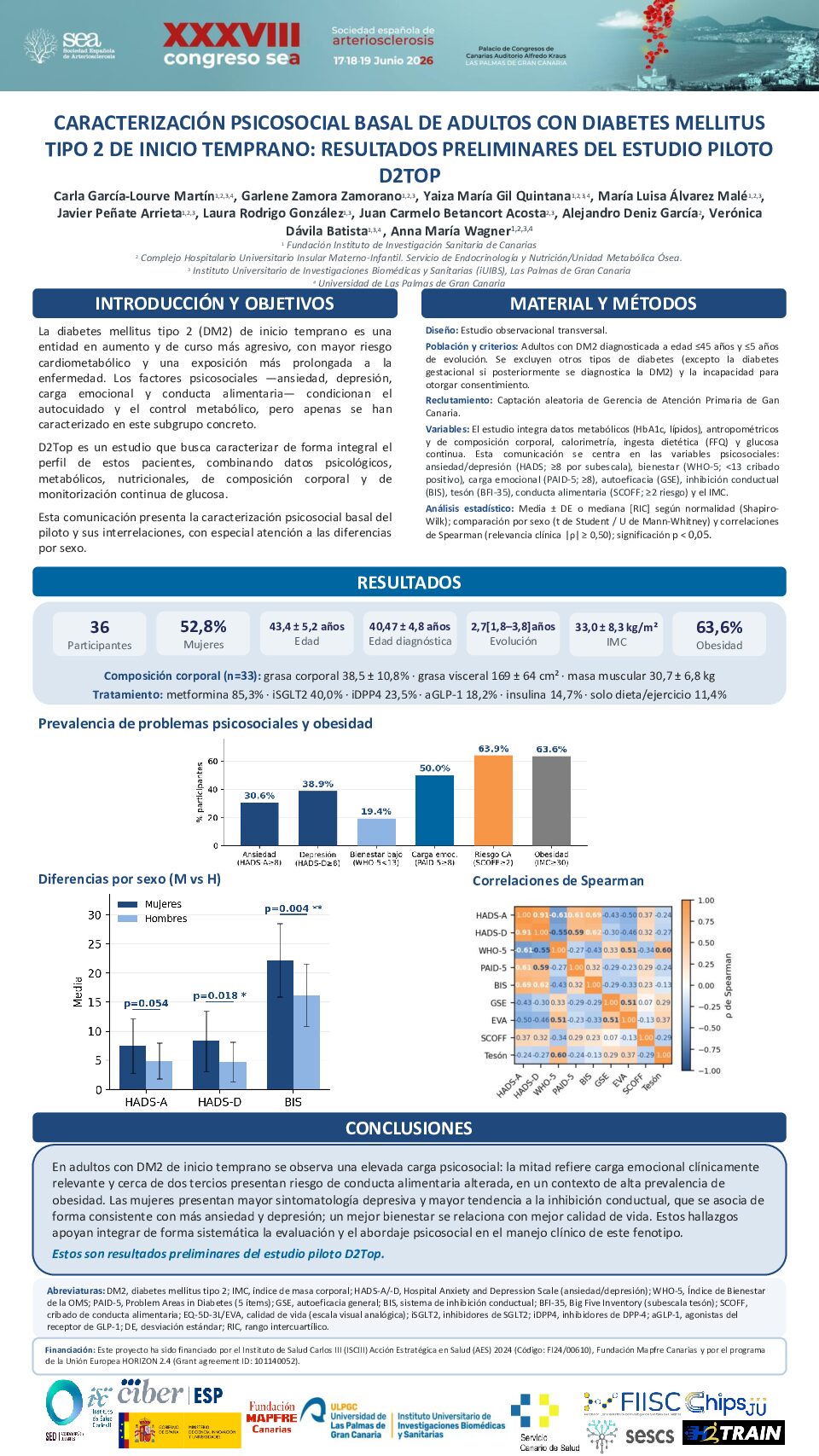
Baseline Psychosocial Characterization of Adults with Early-Onset Type 2 Diabetes Mellitus: Preliminary Results from the D2TOP Pilot Study
Introduction/Objective: Early-onset type 2 diabetes mellitus (T2DM) represents a phenotype with a high biopsychosocial burden. This study characterizes the psychosocial profile of adults with T2DM diagnosed at ≤45 years of age and with a disease duration of ≤5 years, exploring the prevalence of anxiety, depression, emotional burden, social support, and at-risk eating behaviors.
Materials and Methods: Cross-sectional observational study using validated questionnaires: anxiety and depression (HADS; ≥8 per subscale), subjective well-being (WHO-5; <13 positive screen), emotional burden (PAID-5), social support (OSS-3), self-efficacy (GSE), behavioral inhibition (BIS), and eating behavior (SCOFF; ≥2 indicates risk). Descriptive analysis by sex and Spearman correlations.
Results: 36 participants; mean age 43.4 ± 5.2 years, age at diagnosis 40.47 ± 4.8 years, median disease duration 2.7 years; 52.8% women. Predominant treatments: metformin (85.3%), SGLT2 inhibitors (40.0%), DPP-4 inhibitors (23.5%), GLP-1 receptor agonists (18.2%), insulin (14.7%), and only diet/exercise (11.4%). Probable anxiety (HADS-A ≥8): 30.6%; higher in women (p=0.054). Probable depression: 38.9%; higher in women (p=0.018). Positive WHO-5 screening: 19.4%. Significant emotional burden (PAID-5 ≥8): 50.0%; SCOFF risk: 63.9%. Behavioral inhibition was higher in women. BIS scores correlated with anxiety (rho=0.69; p<0.001) and depression (rho=0.62; p<0.001). Anxiety was associated with emotional burden (rho=0.61; p=0.001) and disordered eating risk (rho=0.37; p=0.008). Quality of life (EVA) showed an inverse correlation with depression (rho=−0.46; p<0.001).
Conclusions: These are preliminary results from the D2Top pilot study. A high prevalence of anxiety, emotional burden, and disordered eating risk was observed, with sex-based differences in depression and behavioral inhibition. Psychosocial assessment should be integrated into the clinical management of this phenotype.
And the link of the cogress is:
https://neo.emma.events/sea2026